The feathered and the Furry
Meet our beloved furry and feathered companions who have been a part of Hazelwood Gardens. Some have crossed the rainbow bridge, while others still roam our farm. Cherished memories of old friends and the joy of new ones.

Sunny, the Quarter Horse.
Sunny was trained to cart ( he pulled our friends' wedding wagon) as well as to ride Western and English.
However those days are long gone. He doesn't mind a child on his back being walked on a halter, sometimes, but at 27 years old, he gets really grumpy during the Winter and really just wants to be left alone, though he still doesn't mind getting treats and he's happy to get pets (in the Summer) and perhaps will be even more cuddly if Auntie MaryEllen is around -he's smitten with her!
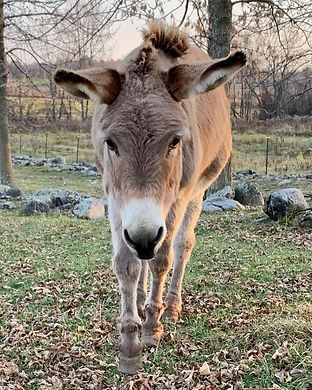

RIP ( We lost both in January 2026 they were over 35 years old) Forever loved: Lily and Buckwheat the mini donkeys
We moved to this farm with Buckwheat in tow. We don't really know how old he is but our best guess is that he is well into his 30s. His best friend Lily is also up there age wise. However , it's only really guesses, we've had Buckwheat for 16 years. When Lily came to this farm it was so that Buckwheat would have a friend. They are the best of buddies and cannot be separated not even for a few minutes. Lily's feet were terribly overgrown when we got her, she is now down to a normal hoof, however they really are just pets even if they live with the sheep.

Serama mini chickens
The Serama is the world’s only true bantam breed, as there is no larger designated counterpart of the chicken.
Seramas are a friendly little chicken—a lot of personality packed into a small package.
Unlike most other breeds, these birds like to follow their flock keeper wherever they may go. We love them: they are great layers, the extra roos dress out to a decent bird, perfect for one person.


Elton ( lowline angus) and his harem of Dexters
Standing 40 inches tall and weighing 700-900 lbs., Dexter cattle are some of the smallest cattle in the world. Dexters are a useful, productive, multi-purpose animal: meat, milk and oxen. They are hardy and do well on grass and hay. They are excellent mothers and easy keepers. Friendly. We have mostly black and a few dun coloured. Some call this cross BARBEE The calves are very beefy, polled and retain the Dexter temperament and taste.

Guinea fowl often referred to as guineas, are gamebirds that are increasingly popular among keepers of small and backyard flocks. Guineas are vigorous, hardy, and largely disease-free birds.
There are many reasons people raise guinea fowl. The birds sound an alarm whenever anything unusual occurs on the farm. Keeping guinea fowl is also an effective means of pest control. Flocks of guineas kill and eat mice and small rats. In addition, guinea fowl can be used to control insects. Wild guineas eat mainly insects, and domestic guineas can consume large amounts of insects without affecting garden vegetables or flowers. Guineas have been used to control wood ticks and insects such as grasshoppers, flies, and crickets. Guineas can reduce keepers’ risk of Lyme disease by consuming deer ticks, which carry the disease. Guinea fowl also eat slugs, and flocks have been known to attack snakes.The meat of young guineas is tender and tastes like that of wild game. The meat is lean and rich in essential amino acids. Guinea eggs can be eaten just like chicken eggs


Maui, Maimai and Beechy
and piglets Mochi and Gingin
The Kunekune is a small breed of domestic pig from New Zealand. Kunekune are hairy with a rotund build, and may bear wattles hanging from their lower jaws. Their colour ranges from black and white, to ginger, cream, gold-tip, black, brown, and tricoloured. They have a docile, friendly nature, and can successfully be kept as pets. They are grazing pigs and do not root making them an excellent choice in multi-species pasture management systems. They are naturally fatty and produce enough meat to sell in the market. The meat of Kune Kune pig is not white meat. They are bred for their lean meat and fast growth.


RIP:Dolly is our pet cow.
She was a Mother's Day gift as I love to make all manner of dairy and needed a docile, well handled cow for that purpose. Jersey cows are a small breed of dairy cattle from Jersey, in the British Channel Islands. They are highly productive and give milk that is high in butterfat and has a yellowish tinge. They adapt well to various climates and environments and have a smaller carbon footprint than other dairy breeds.


Flemish x New-Zealand
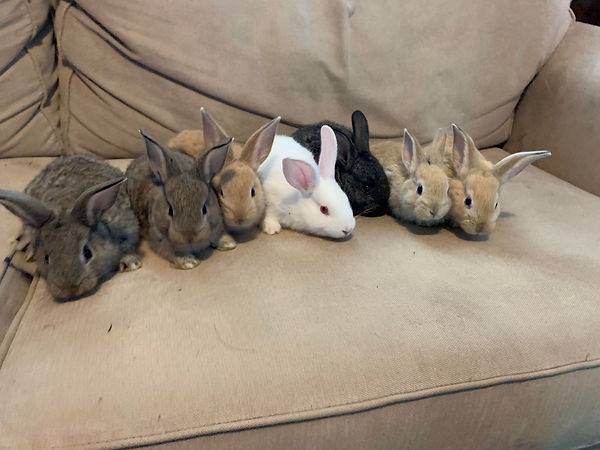
These are some of our bunnies. We have a mix of Flemish and New Zealand rabbits. The Flemish Giant rabbit is the largest breed of domestic rabbit. Both breeds are historically a utility breed used for their fur and meat. They are often kept as pets as they are known for being docile and patient when being handled.

The flock: from Shetlands, to Icelandics, Dorper, Katahdins,
Karakuls and more

We have been breeding different genetics into our flock over the last 2 decades. We have bred for: shedding , good mothering, fertile and ease of delivery, 3 pregnancies per 2 years, single or twins, good feet, good carcass and weight on grass and hay alone , good ability to thrive in our climate. This is what we have achieved as we have now 2 crop of lambs a year. One around the beginning of the year and one mid-Summer.


Our flock: Gozilla and the Tokyo chicks
As already mentionned we have Guinea Fowl and Seramas, but we also have geese , mostly Embden and Chinese. Gozilla was raised with chickens so he maily thinks he's a chicken and protects his little buddies. Then there's Oswoldo and Joe Shawarma, they are mixed breed geese.
We also have ducks , Runners and Muscovies mainly. We love the Muscovies as they are less messy than their water loving counterparts. Muscovies do not tend to wade, they actually fly and have nails that grip on to trees to roost up high. But farm muscovies generally don't fly much as they get too big : up to 15lbs of red ( like beef) meat. It's the only fowl that I know of that can safely be served rare. They lay very well, delicious eggs that are the best to bake with! They eat a lot of flies and are rather silent and make a hissing sound. They always seem to do decently well in Winter though their feet tend to freeze easily.
Runners and other ducks are good at keeping down the bugs and run around like live bowling pins, which make them amusing. They also lay quite well.
We usually have turkeys too, as we really like them , they make really nice pets too. Then we also usually have quail , however they are short lived, which is the down side, but they are fun little birds to keep and we love their little eggs.
We have standard size chickens too of course. Breeds vary from year to year , but we like to have a colourful flock and try and keep breeding trios of different breeds for fun.


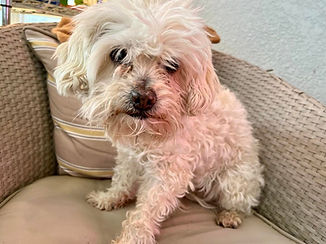

Muffin and Spot
our Lhassa-Poos born in 2006
We had their mama Daisy until she reached 16 and their Uncle Pooky. Our children grew up with the ''puppies'' being around. As I write this they are 16,5 years old and Muffin, who has lymes, is aging rapidly. A few years ago, it was Spot that we thought we were loosing. They are truly members of our family and have been the most amazing little dogs ever.


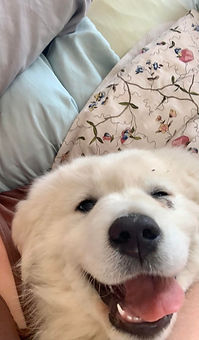


Rosie and Yeti , our Maremma Livestock Guardian dogs
Rosie and Yeti are only just a year old, but they have made such a difference on our farm. Predators don't stand a chance! While they are big sucks and goofs , Yeti in particular, they are extremely protective and we must always insure that we introduce new comers to them. They are not from the same breeder or litter, so we do intend to breed them at least once as we would like to raise a few puppies to help with the guarding -200 acres is too much to watch for 2 dogs and they are up all night already keeping everyone safe. They are smart dogs, hard to train as they will do whatever they feel is necessary to keep their flocks safe.
Generally maremmas , know in Italy as wolf slayers, are not touted as pets, but we think that folks that would have a country size property would do well with a castrated male specifically.
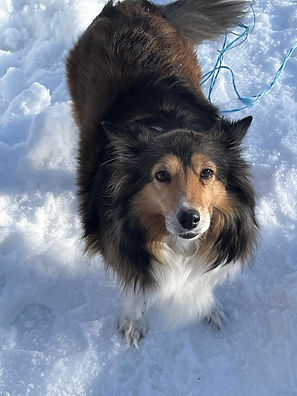

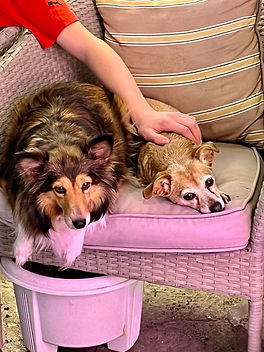
Robin is our Shetland sheep dog
Robin came to us in 2021 at the age of 7. She wasn't a fan of the new puppy and the young toddler her parents had and thus, while picking up an item via Marketplace, we were offered Robin as a bonus. She was extremely nervous when we first brought her home and terribly out of shape. She could not walk to the end of the driveway without wanting a rest. Now she walks a few kilometres daily and is much calmer and loves life with all her pals.


Prince the Border Collie
Prince came to us unexpectedly as we weren't planning on getting anymore dogs, but we received a call from a woman looking to find a suitable home for him. He was a problem dog having been confined to a small yard and having been mistreated by a substance abuser. He was afraid of sticks, most people , especially women, and lunged at children. He did not like to be touched. He was terrified of life to the point that we even discussed not keeping him as we felt that he was a danger. But we gave it time. And with time he has become the friendliest, happiest , children loving '' I want to be your best friend '' kinda dog. He LOOOOVES his papa more than anyone, he loves car rides, running alongside the tractor to go to the woods and swimming multiple times a day in the ponds.